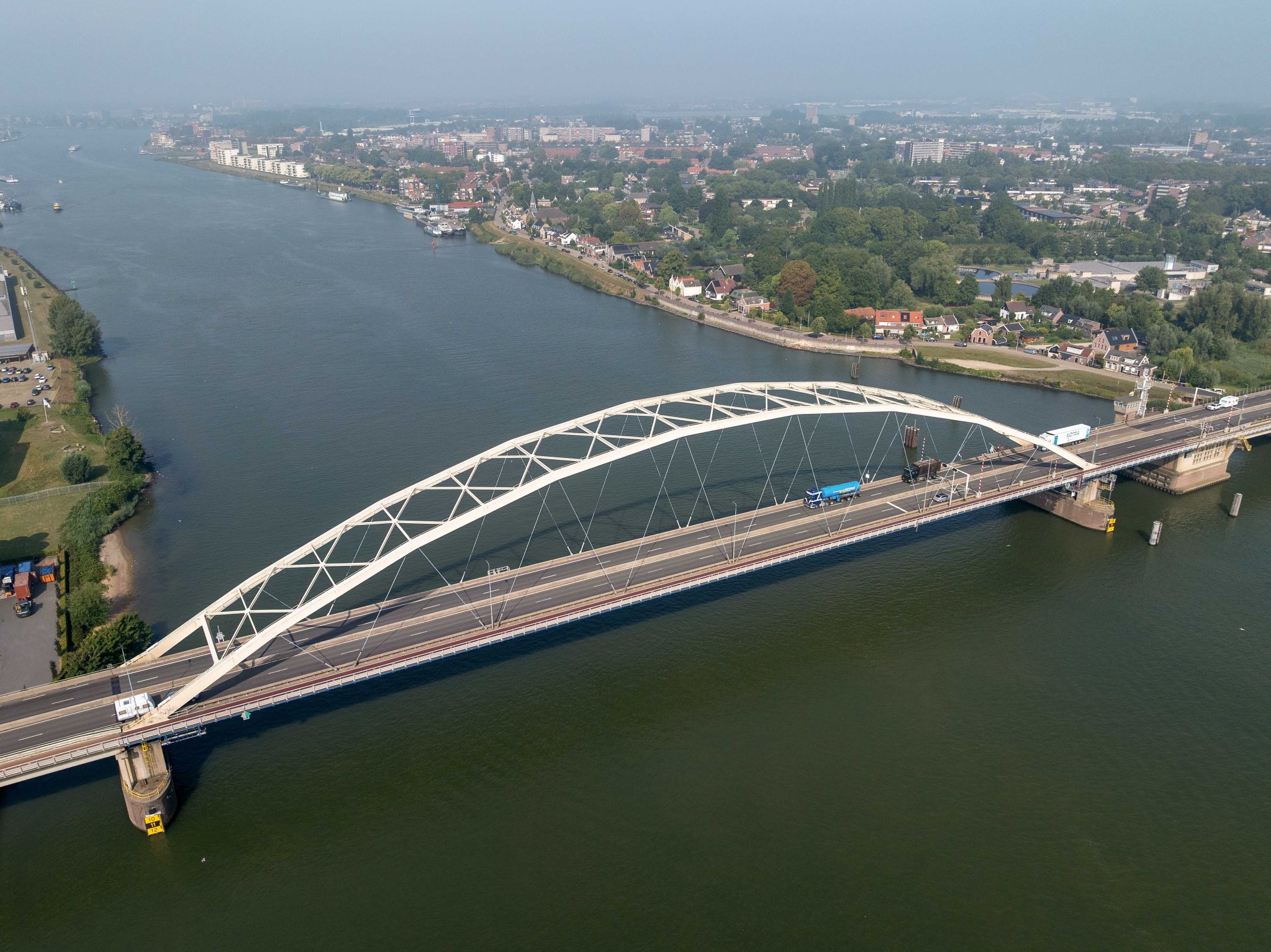
Although it will still take several months before the Papendrechtsebrug is closed to traffic, work is already well underway behind the scenes. Commissioned by the consortium Mobilis and Croonwolter&dros (CMCP), we have been working for quite some time at our yard in Krimpen on the construction of the new bridge leaf.
Patrick Bos, project manager at Hollandia Infra, gives us an update on the progress during a tour. He welcomes us at the entrance of the hall. A heavy door swings open, we descend a staircase and suddenly find ourselves in the middle of the work. “This is where we are building the bridge deck,” Patrick explains. “We had to wait our turn for a while, as we need the entire factory floor for this bridge. Now that a previous project has been completed, we can really pick up the pace.”
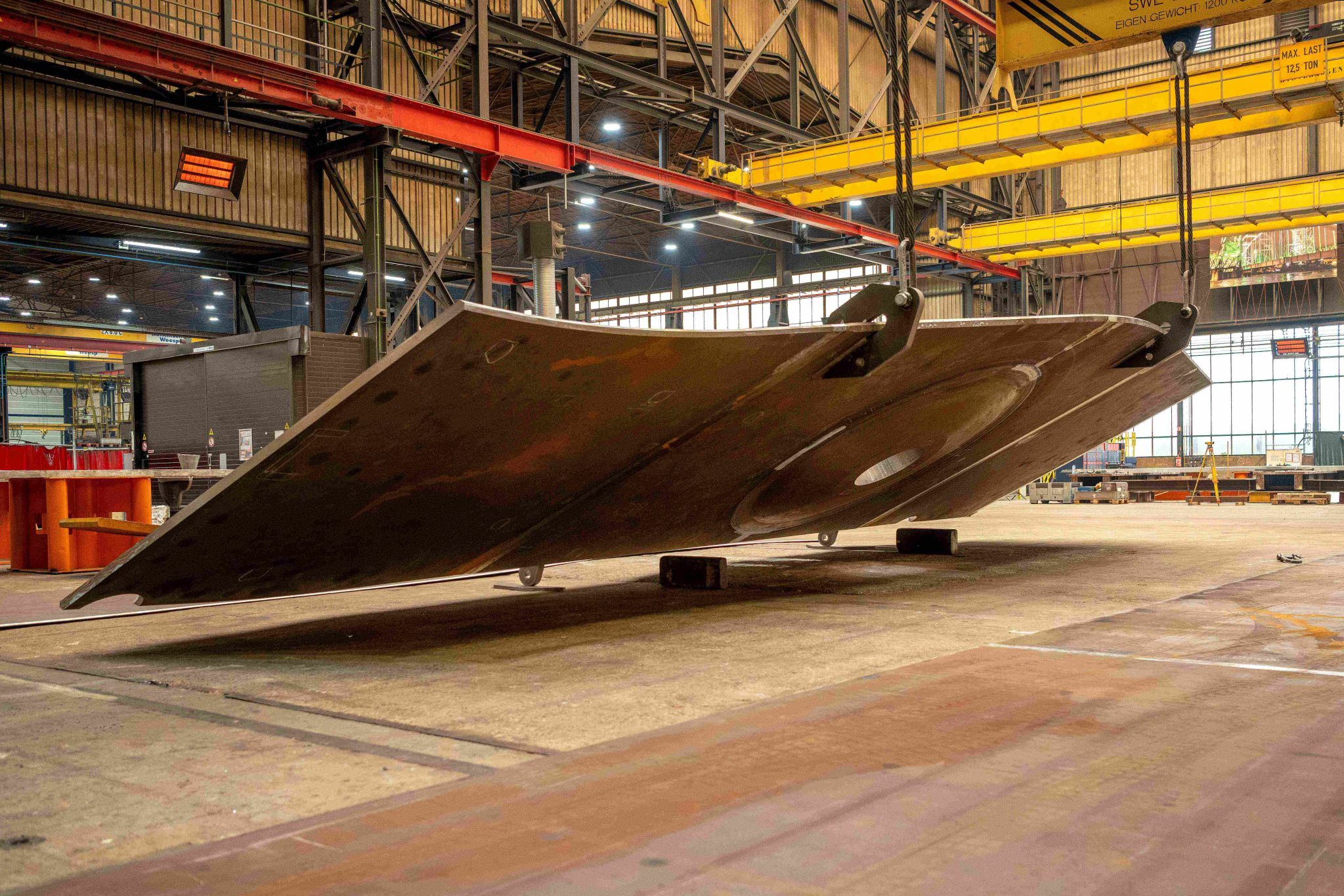
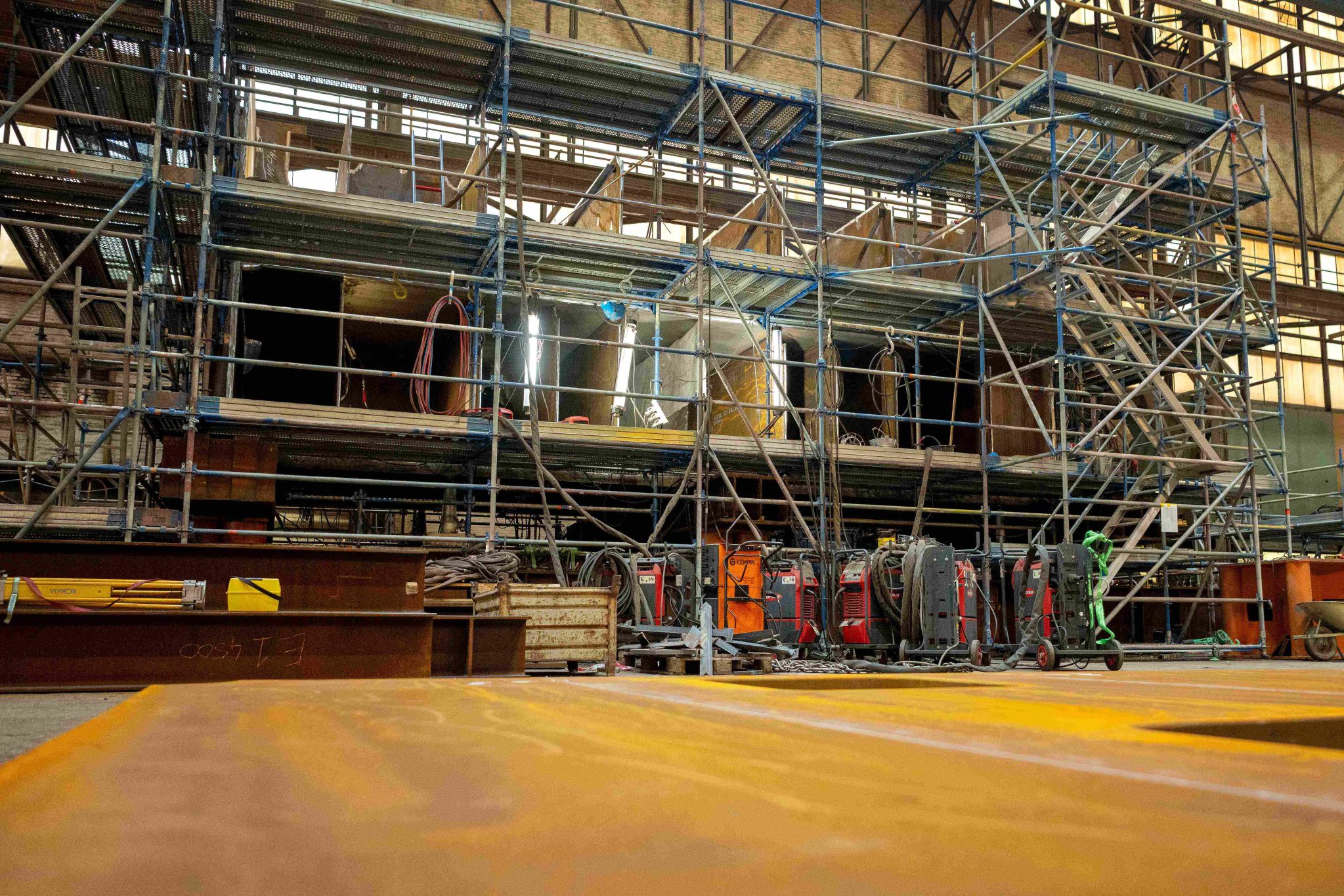
Anyone expecting to see one large structure will quickly notice that the bridge leaf is actually being assembled piece by piece. Various components are neatly arranged across the workshop. “Here we are producing the steel structure of the moving part of the bridge,” Bos explains. “This includes the deck, the ballast box, the tail sections and the main and cross girders. All the components are welded to the deck, like a very large construction kit.”
A thin deck for thousands of vehicles
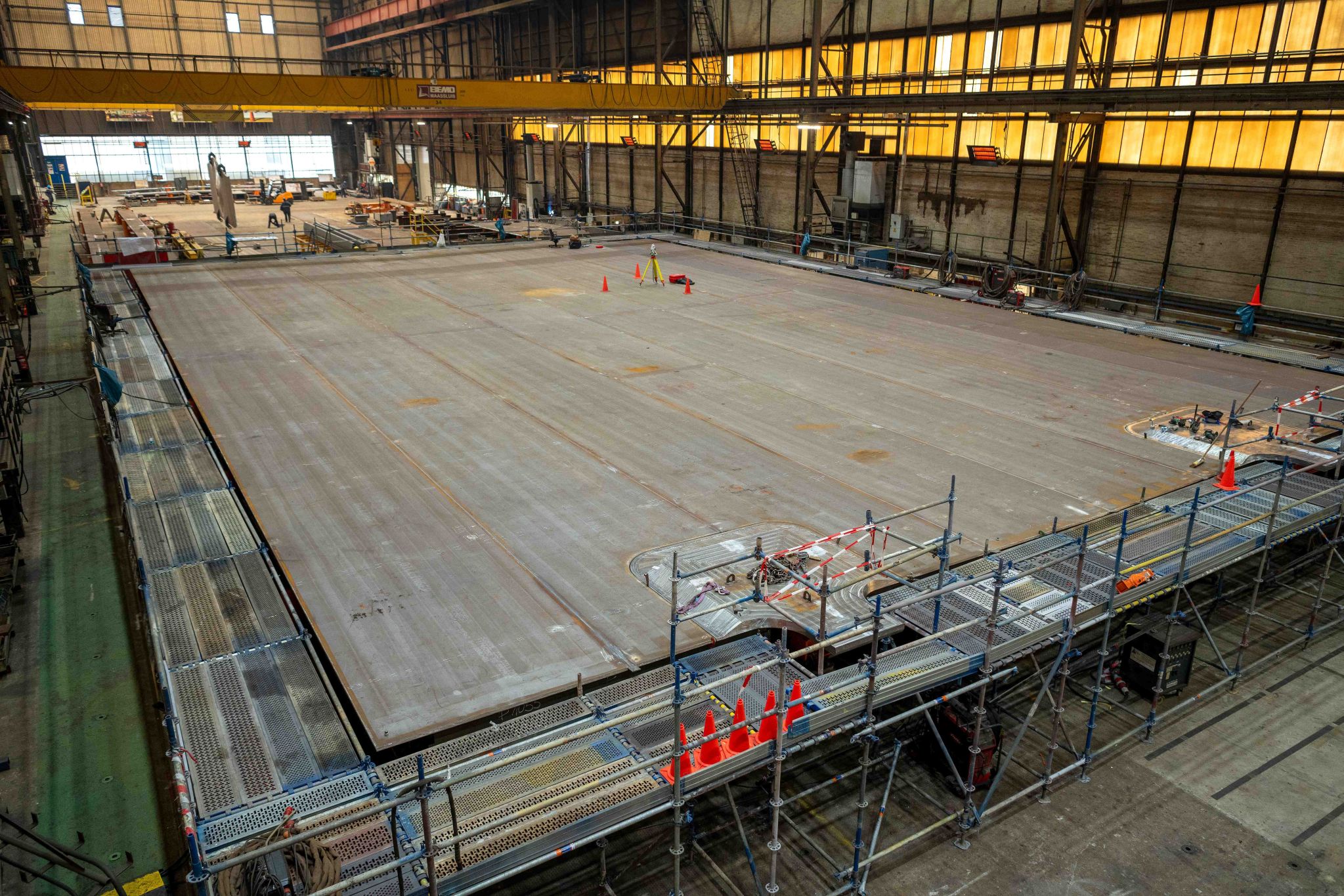
At the far end of the hall, roughly 100 metres away, lies the bridge deck itself: a large rectangular structure measuring 23 by 33 metres, elevated about 1.5 metres above the ground. What immediately stands out is how thin the deck appears. “26 millimetres,” Patrick says when he notices our glance. “That may seem very thin, considering that thousands of vehicles will drive across it every day. But we reinforce this steel plate with trough stiffeners.”
He points to long steel V-shaped elements nearby. “We weld these underneath the deck along its entire length. On top of that we place cross girders. That way we make sure the bridge is strong enough without making it unnecessarily heavy.”
The weight of the bridge leaf turns out to be a recurring topic during the tour. Due to the increase in traffic volumes and vehicle weights over the years, the new bridge leaf will be significantly heavier than the current one. “We are going from 900 tonnes to about 1,500 tonnes,” Patrick explains. “Every kilogram matters. The heavier the bridge leaf becomes, the greater the impact on the existing substructure of the bridge, the bridge pit and the foundation. These were originally designed for the lighter bridge leaf currently in place.”
“To ensure the substructure of the Papendrechtsebrug can support the heavier leaf, the bridge pit and the support pier will be significantly reinforced. This work will take place during the bridge closure later this summer.”