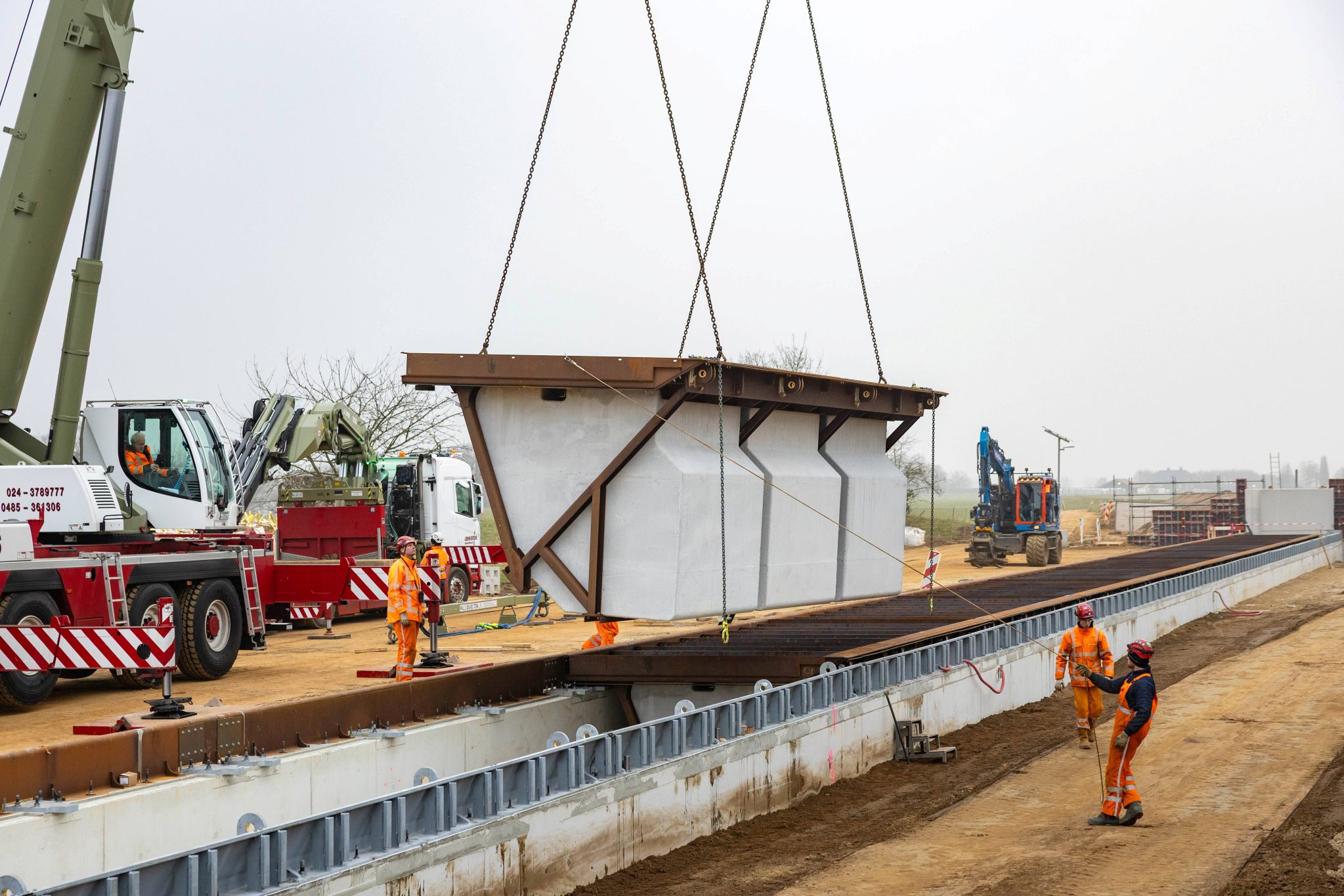
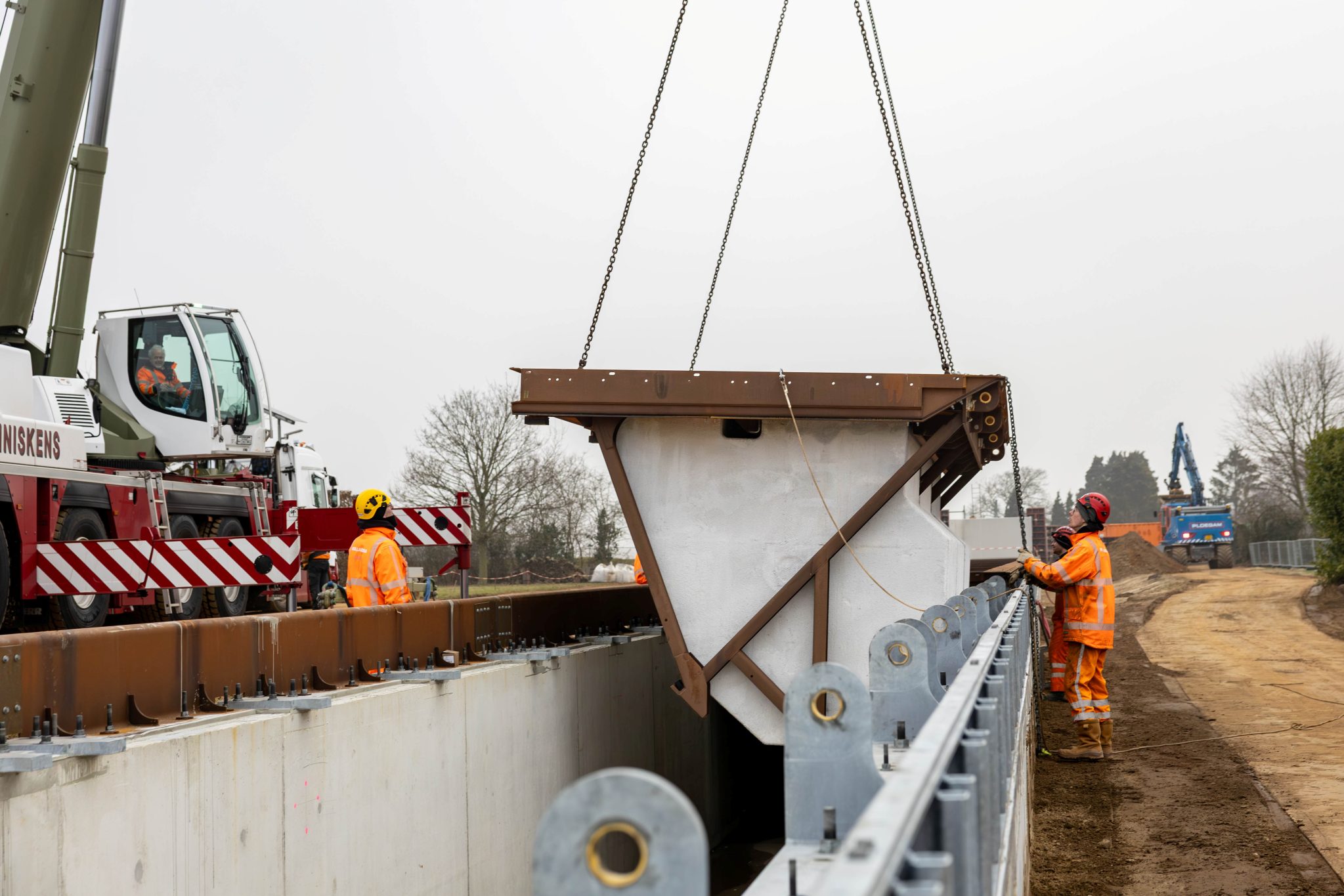
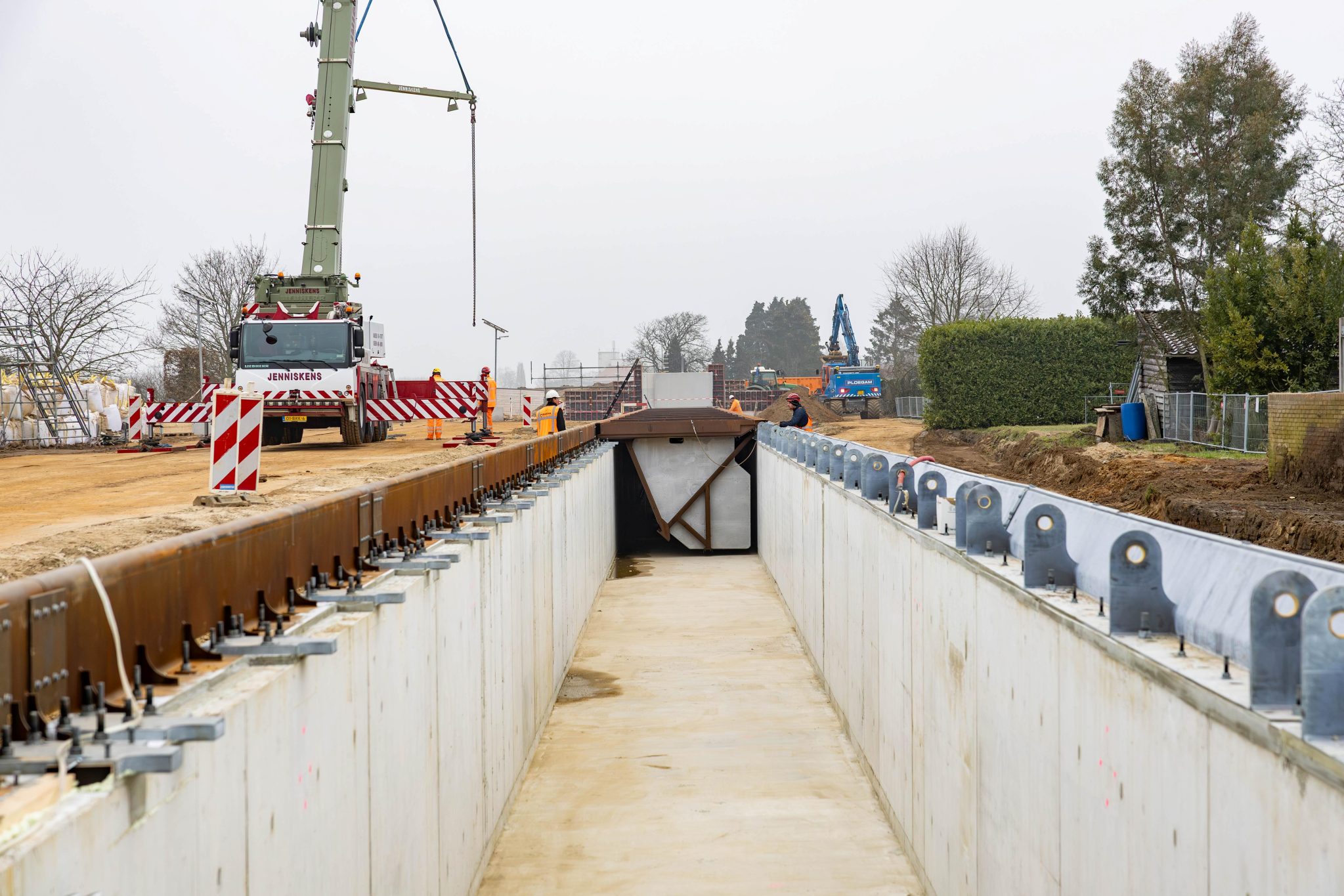
The construction of the self-closing flood barrier in Arcen is steadily taking shape. On 9 and 10 March, several additional steel gates were installed near Maasstraat 29–49, marking the start of the second phase of gate installation.
These gates form the core of the innovative Vlotter barrier. Under normal conditions, they remain out of sight inside a concrete chamber within the embankment. When the water level in the River Maas rises, the chamber fills with water and the buoyancy of the system automatically lifts the steel gates, creating a water-retaining barrier. Without manual operation, a robust protection against high water is formed.
The gates have been custom-made for each section of the alignment, which extends over more than 600 metres in total. Each gate measures approximately 9.5 metres in length, 3.5 to 4 metres in width, and 3 metres in depth. A single gate weighs around 7,000 kg.
During the works on Monday, a film crew from WDR (Westdeutscher Rundfunk) was also present. They produced a report on the dyke reinforcement project in Arcen and the unique self-closing flood barrier. The item features interviews with:
-
Jeroen Achten – Executive Board Member, Waterschap Limburg
-
Ivo van Peer – Project Manager, Dijkzone Alliantie
-
Paul Hermsen – resident of Arcen
-
Holger Friedrich – Director, Deichverband Bislich-Landesgrenze
The report was broadcast in the programme Lokalzeit Duisburg. Watch the video here.
Would you like to learn more about how the self-closing barrier works?
Also read our earlier update in the BouwApp.
About the project
Commissioned by Waterschap Limburg, Dijkzone Alliantie Arcen — a collaboration between Ploegam, Dura Vermeer and Hollandia Infra — is working on the Arcen dyke reinforcement and relocation project. Part of this project is the installation of a self-closing flood barrier (Vlotter barrier) in 38 back gardens along the River Maas.